 nightjar
How an incident runs
Nightjar takes over after the alert, end to end on GitLab.
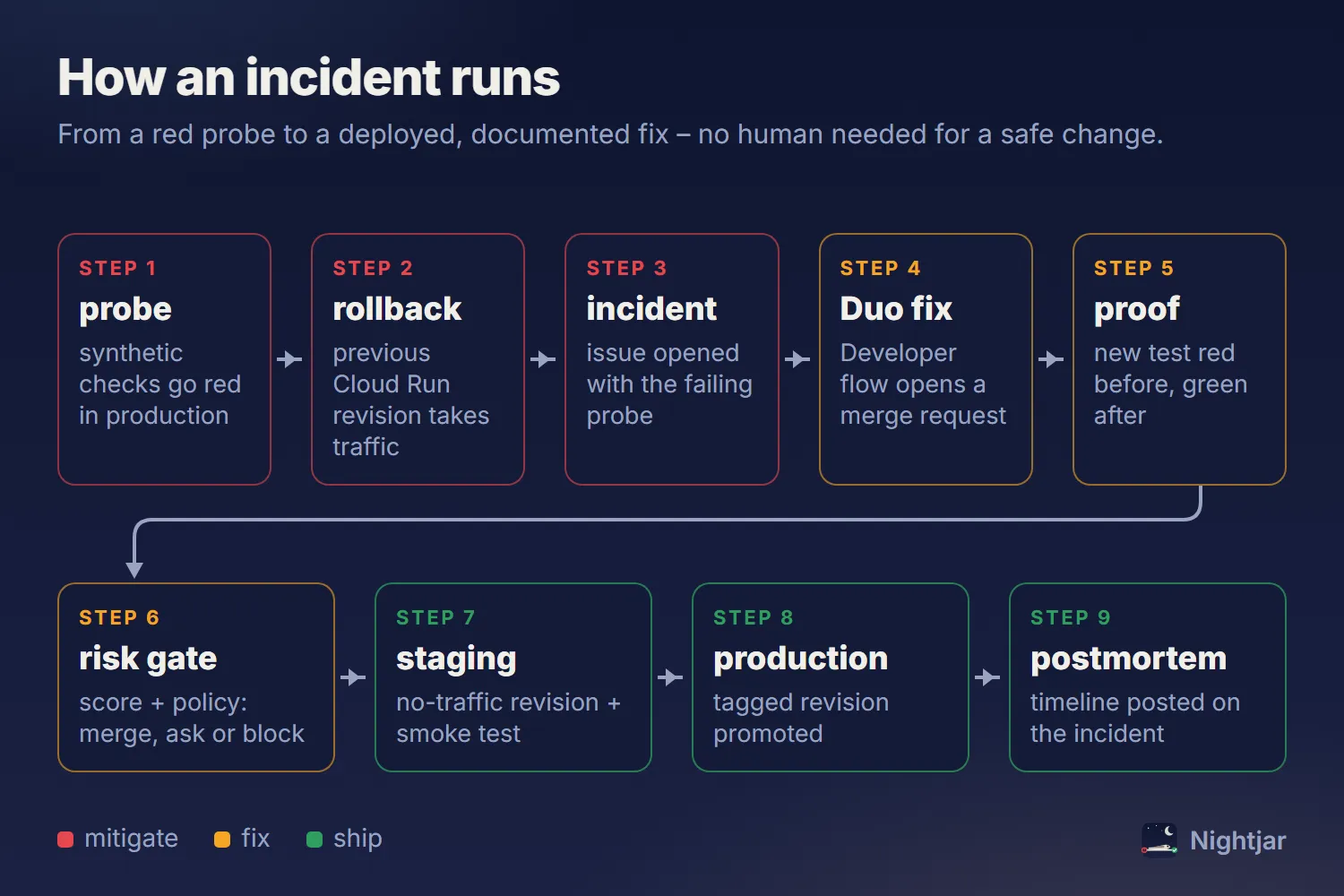
- Probe. A scheduled probe checks real customer journeys in production. When one fails, the pipeline rolls back first.
- Incident. An incident issue is opened with the exact failing request, expected vs. actual response and the suspected code location. It is assigned to the GitLab Duo Developer Flow.
- Fix. AGENTS.md makes the agent write a regression test first, then the smallest fix.
- Proof. The new test must fail on the old code and pass on the new code, and no existing test may be changed.
- Gate. A risk gate decides how much autonomy the change gets.
- Release. No-traffic staging revision, smoke test, then exactly that revision is promoted. The pipeline writes a postmortem into the incident.
Proof: red before, green after
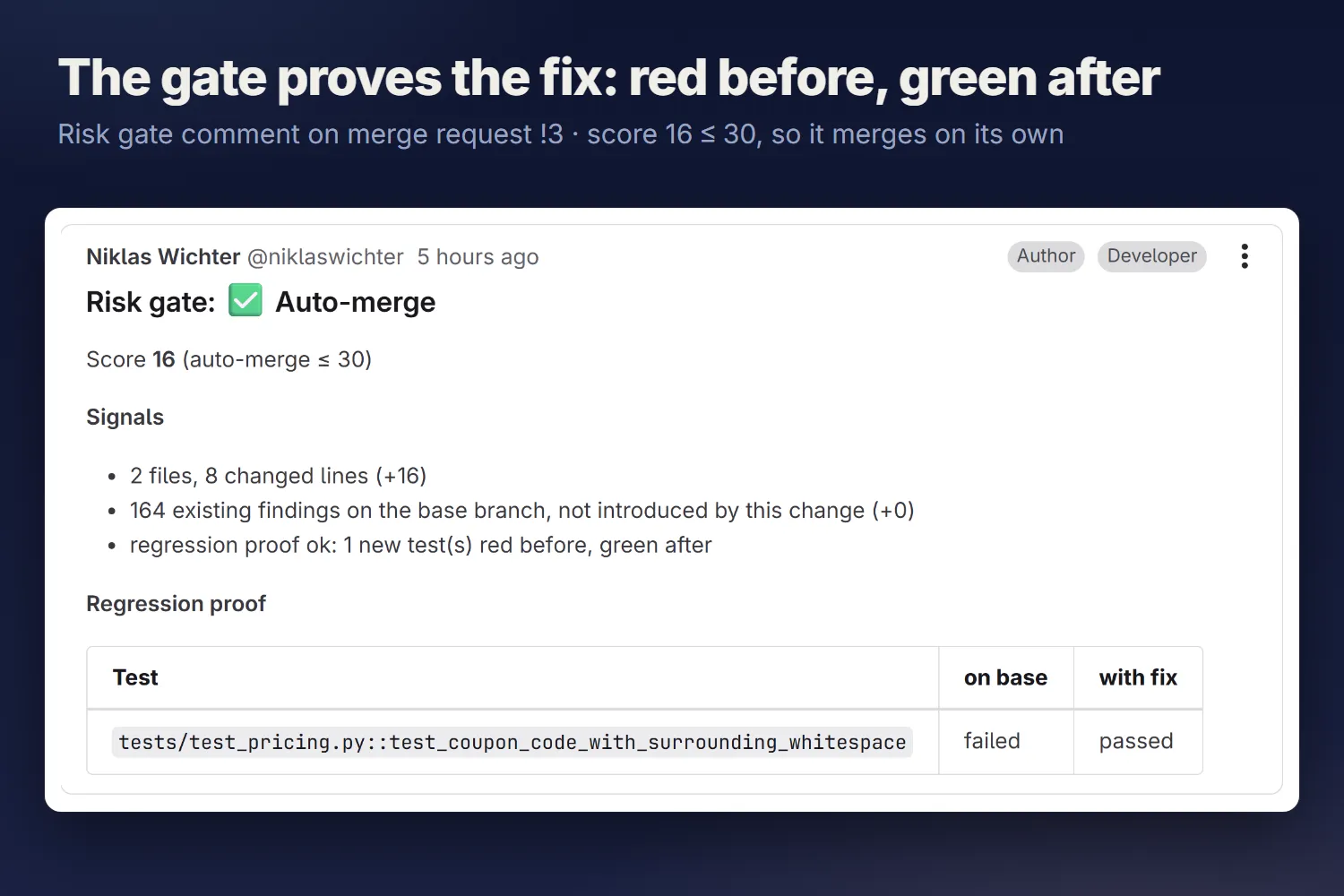
The risk gate
- Auto-merge when the score is at most 30 and nothing escalates.
- Escalate when the regression proof fails, a protected path is touched (for example
app/tax_rates.py, owned by Finance in CODEOWNERS), or a new Critical/High finding appears. A human reviewer is requested. - Block when an existing test was edited or a secret was found. The job fails.
The gate runs the tooling and policy of the target branch, so a merge request cannot loosen its own gate.
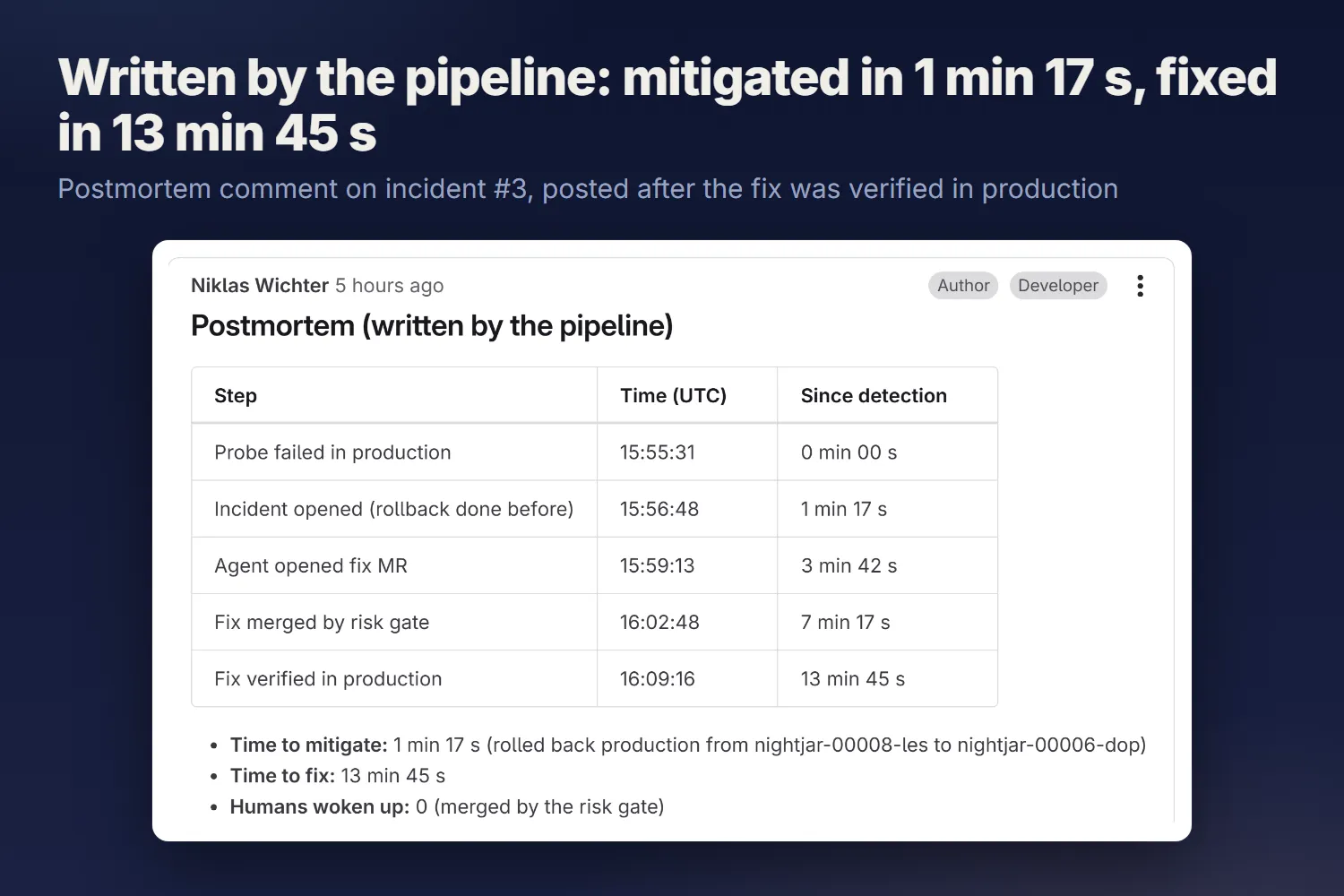
Postmortem written by the pipeline
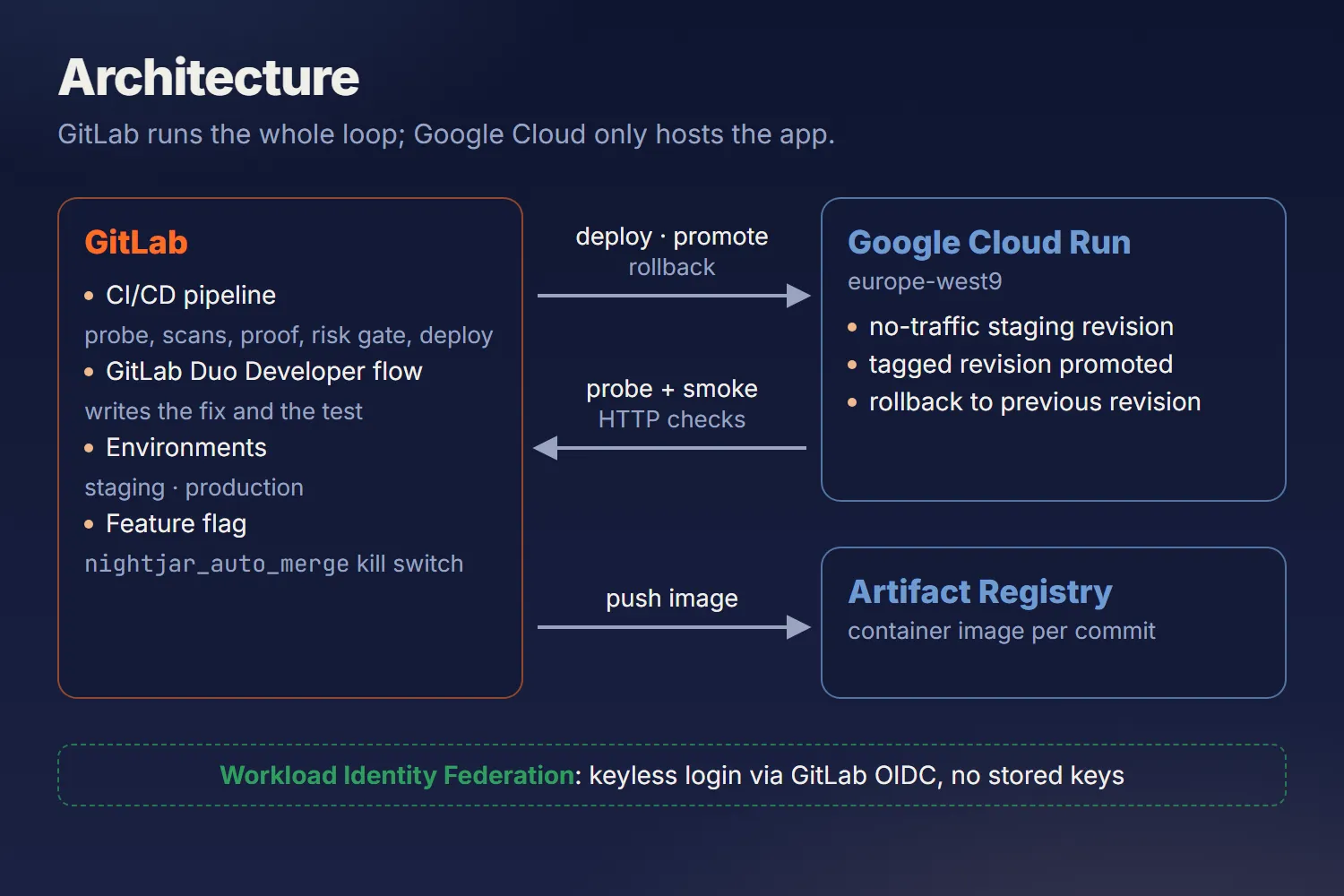
Architecture
What this does not claim
- The gate is automation, not an access control. Branch protection and required approvals are project settings that this project's role cannot change; the gate requests a reviewer instead of enforcing one.
- Probes catch what they test. The release smoke test runs a small set of critical journeys, the scheduled probe runs the full set, including edge cases such as pasted coupon codes.
- Incident to agent hand-off uses a personal access token so the flow trigger fires; the merge request then appears under that account.
- The mapping from a failing endpoint to a suspected file in the incident is a fixed table, not a diagnosis.